
Wahaʻula Heiau
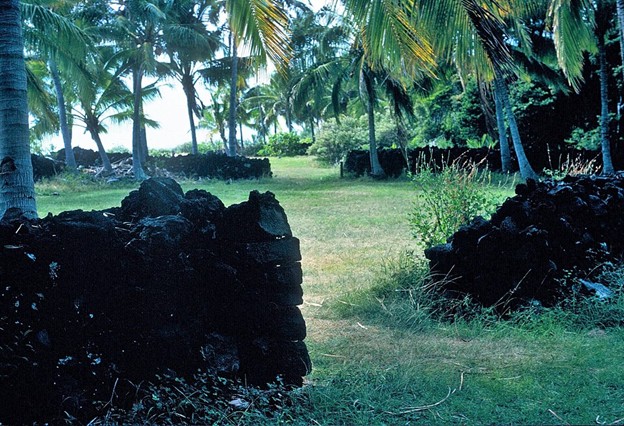
Wahaʻula Heiau is gone, but not in the way most places are lost.
Wahaʻula disappeared the way it had always existed — in relationship to the land beneath it. Lava did not erase it so much as reclaim it.
Built sometime in the 13th century, Wahaʻula Heiau stood along the rugged coastline of Puna, dedicated to Kū-wahaʻula (Kū of the red mouth) to serve the god associated with war, power, and sacrifice. The temple was built under the influence of Paʻao, the priest from Kahiki (scholars often believe this is Tahiti or broadly central Polynesia) credited with introducing a new religious order to Hawaiʻi. His arrival marked a break from earlier ʻIʻo-centered belief systems and helped formalize the kapu system, elevating Kū and luakini heiau (a heiau where human and animal sacrifices were offered).
Oral traditions surrounding Paʻao’s arrival are among the most dramatic in Hawaiian history, filled with conflict, prophecy, and rupture, stories that mirror the upheaval his religious system represented. In this telling, Wahaʻula was not just a temple, but a physical expression of a reordered world.
The mana (spiritual power) of Wahaʻula endured for nearly five centuries. By the end of 1819, temple rituals had ceased as Liholiho (Kamehameha II) and Kaʻahumanu formally dismantled the kapu system. In 1824, a royal decree ordered the destruction of heiau throughout the islands, marking the end of the religious order that had defined chiefly power for generations.
Wahaʻula was desecrated but not erased. The site remained visible for more than a century, its stone platforms exposed along the Puna coast. In 1938, the surrounding lands were incorporated into Hawaiʻi National Park, later Hawaiʻi Volcanoes National Park, and the National Park Service built a small visitor center nearby.
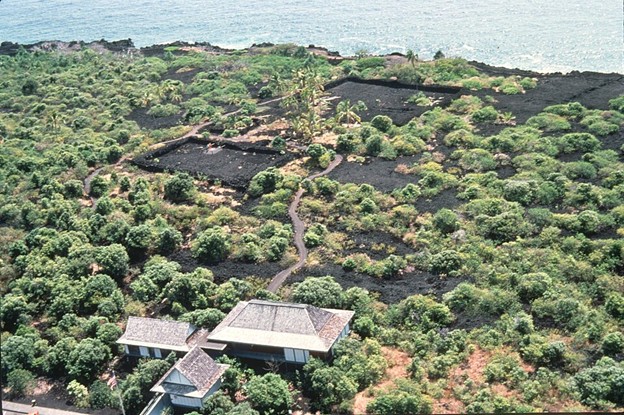
Then came Kīlauea, more specifically, Puʻu ʻŌʻō.
In 1989, lava flows advanced toward the heiau. Witnesses reported that the lava reached the outer walls and then split, flowing around the structure and leaving it temporarily untouched. Many saw meaning in the pause, a moment where the volcano seemed to acknowledge the sacred ground.
Eight years later, in 1997, the lava returned. This time it did not divert. Wahaʻula Heiau was buried completely.
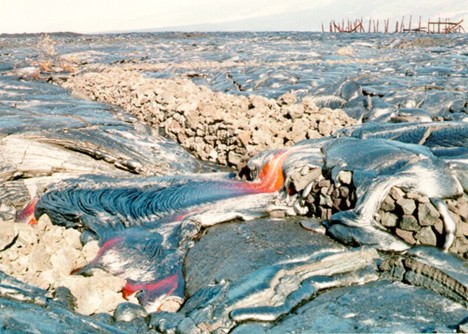
What remains today is not a ruin, not a foundation, not even a visible trace. The heiau lies beneath hardened pāhoehoe, inaccessible and unseen. There are no stones to walk among, no structure to mark. Only the name persists, fixed to a place where the land itself was taken.
Wahaʻula represents a kind of loss unique to Hawaiʻi. It was not erased by conquest. It was overtaken by the same volcanic forces that created the island, forces tied to the gods the temple was built to appease.
Yet names endure longer than stone. Wahaʻula Heiau is no longer visible, but it has not vanished. It survives in memory, language, and story, a reminder that some places are lost not to time or people, but to the land itself.