Nā Pali Coast
Place: Nā Pali Coast, Kauaʻi
Type: Coastline / valleys / cultural landscape
Story it tells: A coastline shaped by erosion, isolation, and generations of Hawaiian settlement amongst towering cliffs.
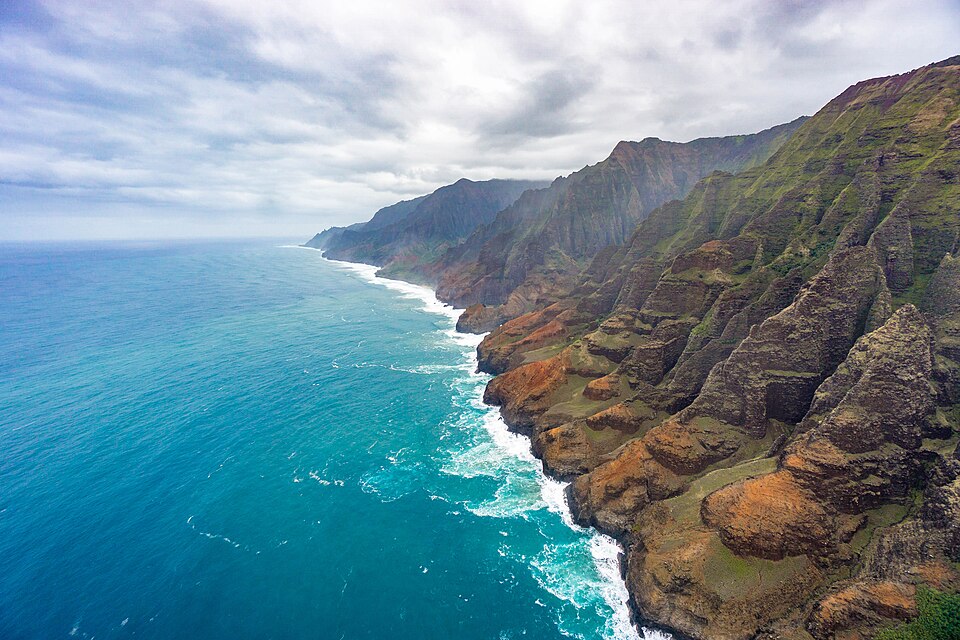
Nā Pali means “the cliffs,” referring to the steep ridges and sharp valleys that rise thousands of feet above Kauaʻi’s northwestern shoreline. Carved over millions of years by rainfall, streams, and erosion, the coastline became one of the most dramatic landscapes in Hawaiʻi. The cliffs, valleys, and narrow shoreline created a region that was both isolated and deeply connected to the ocean.
The first settlers along the Nā Pali Coast arrived around the 13th century, establishing communities in valleys such as Kalalau. These valleys supported Hawaiian life through loʻi kalo, fishing, and coastal travel routes connecting Hanalei, Waimea, and Niʻihau. Trails across the coast linked communities despite the rugged terrain, and the coastline became part of broader networks of trade and movement across Kauaʻi.
Today, the Kalalau Trail remains the primary land route along the coast, stretching roughly eleven miles from Hāʻena to Kalalau Beach. The trail crosses multiple valleys and cliffs before ending at one of the most isolated beaches in the islands. Much of the coastline beyond Kalalau remains inaccessible by road and can only be reached by foot, boat, kayak, or helicopter.
Following Western contact after 1778, diseases introduced to Hawaiʻi devastated communities along the coast. Over time, permanent settlement declined as populations fell and land use patterns shifted elsewhere on Kauaʻi. By the 20th century, most of the Nā Pali Coast had become largely uninhabited.
Today, the Nā Pali Coast is protected through state parks and reserves, preserving both the landscape and the sense of remoteness that defines it. The name itself remains direct and descriptive: Nā Pali “the cliffs.”