
Mauna Kea
Place: Mauna Kea, Hawaiʻi Island
Type: Volcano / sacred mountain / astronomical site
Story it tells: A mountain whose name connects snow, Wākea, sacred summit traditions, and the modern tension between science and cultural meaning.
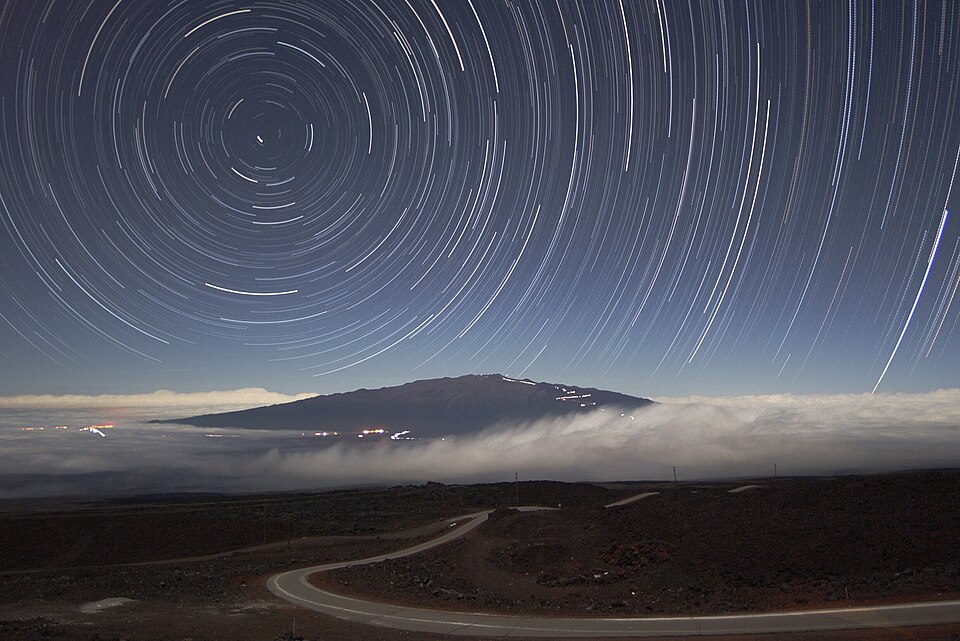
Mauna Kea, short for Mauna a Wākea, is often translated as “white mountain,” a reference to the snow that can cover its summit. But the full name connects the mountain to Wākea, a sky father figure in Hawaiian tradition.
The summit has long been considered sacred, once restricted to high-ranking aliʻi. In Hawaiian tradition, Mauna Kea is associated with the dwelling place of gods and the piko, or umbilical cord, of the island.
Rising 13,803 feet above sea level, Mauna Kea is the tallest mountain in Hawaiʻi. Its high elevation, dry air, and stable atmosphere have also made the summit one of the world’s most important sites for astronomical observation. A similar relationship between elevation, sky, and meaning can be seen on Haleakalā, where the mountain is tied to moʻolelo about the sun.
Today, Mauna Kea is home to some of the world’s most powerful telescopes, creating an ongoing tension between scientific use and cultural significance. The name reflects both its physical prominence and its place within Hawaiian cosmology.