Kona
Place: Kona / Kailua-Kona, Hawaiʻi Island
Type: District / town / royal center
Namesake: Kona, the Hawaiian term for the leeward or sheltered side of an island
Story it tells: A leeward coastal district that became a seat of Hawaiian governance, royal retreat, and one of the most historically important regions on Hawaiʻi Island.
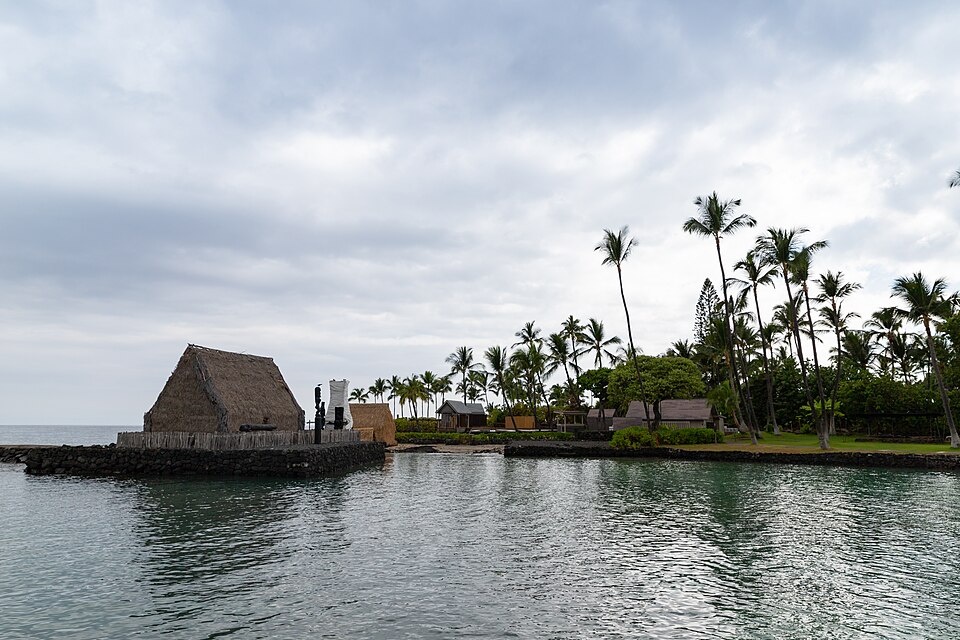
Kona refers to the leeward, dry side of an island, a directional term used throughout Hawaiʻi. On Hawaiʻi Island, the name became closely associated with the western coastal district and the town now commonly called Kailua-Kona. The name Kailua means “two seas” or “two currents,” likely referring to ocean conditions along the coast. Together, Kailua-Kona distinguishes the town from Kailua on Oʻahu.
Historian and Hawaiian scholar Mary Kawena Pukui described Kona as “clouds over the sea in the calm; whispering sea,” reflecting both the district’s dry climate and calmer western waters. Protected from the trade winds by the rolling slopes of Mauna Loa and Hualālai, Kona developed differently from the wetter windward districts of Hawaiʻi Island.
The region became politically significant under Kamehameha I, who made Kona his principal residence and center of government. After bringing Kauaʻi and Niʻihau under his rule in 1810, Kamehameha returned and spent much of his remaining life there. Kona remained closely associated with Hawaiian royalty after his death. Following unification, Kona briefly served as the capital of the Kingdom of Hawaiʻi before the capital later shifted to Lāhainā and eventually Honolulu. The coastline also became associated with Hawaiian royalty, many of whom used the area as a retreat.
Before Western contact, the Kona coast supported extensive Hawaiian settlement. Fishponds such as those preserved at Kaloko-Honokōhau National Historical Park reflected sophisticated systems of aquaculture and resource management. Communities along the coast relied on fishing, agriculture, and carefully maintained ahupuaʻa systems specifically adapted to Kona’s drier environment.
In 1820, the first Protestant missionaries arrived in Kailua-Kona, establishing churches and schools, encouraging Christianity and education, specifically literacy. Through the 19th century, Kona remained relatively small and centered around fishing, royal activity, and agriculture. In the late 20th century, tourism and broader community development transformed Kailua-Kona into one of the major commercial centers on Hawaiʻi Island.
Today, Kona exists simultaneously as a district, a historic royal landscape, and a visitor destination. The name still carries its original geographic meaning: the leeward side.