
Honoapiʻilani Highway
Place: Honoapiʻilani Highway, Maui
Type: Highway / coastal route / historic corridor
Story it tells: A modern road following an older West Maui corridor tied to Piʻilani, coastal settlement, Lahaina, and the continuing challenge of moving through Maui’s rugged shoreline landscape.
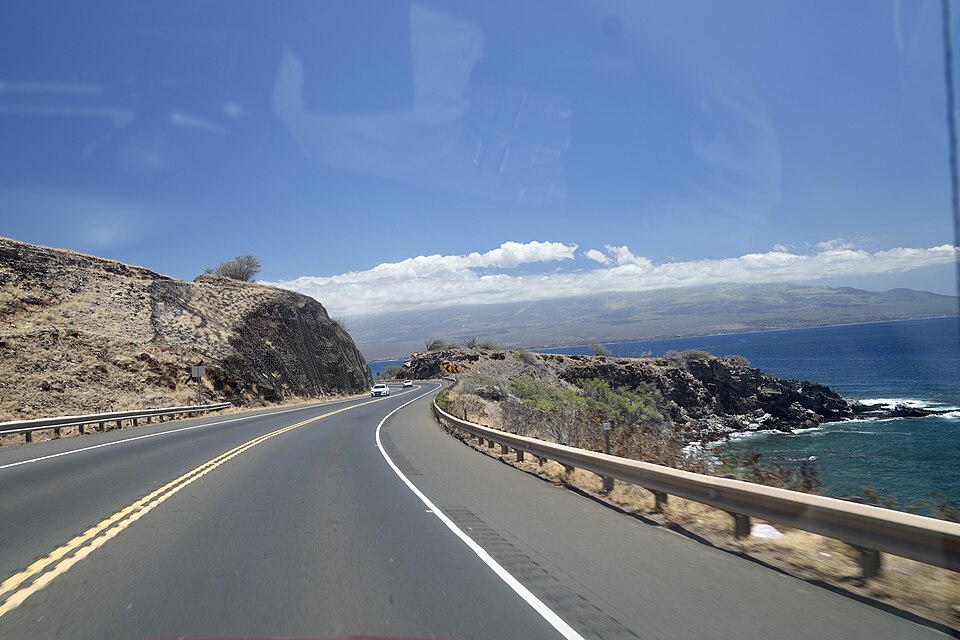
Honoapiʻilani Highway is one of Maui’s most important coastal roads, linking Central Maui with Lahaina and West Maui. The name comes from Nā Hono a Piʻilani, often translated as “the bays of Piʻilani,” referring to the chain of West Maui bays associated with the 16th-century chief Piʻilani. Those bays included Honokōwai, Honokeana, Honokahua, Honolua, Honokōhau, and Hononana.
Piʻilani is remembered for helping unify Maui and for building an extensive stone-paved alaloa, or long trail, that connected communities across the island. The modern highway follows parts of this older coastal corridor, especially along the dry, rugged shoreline between Maʻalaea and Lahaina. In that sense, Honoapiʻilani Highway is not simply a road to West Maui. It is a modern layer over a much older route of movement, settlement, and connection.
Before the current highway, travel across the Lahaina Pali was difficult and exposed. Older routes included the Lahaina Pali Trail, a narrow cliffside road built around 1900, where sharp curves, steep slopes, and limited passing room made travel slow and hazardous. The present two-lane route, including the Pali Tunnel, was completed in the mid-20th century and greatly shortened the trip between Maʻalaea and Lahaina.
Today, Honoapiʻilani Highway remains essential to West Maui life, commerce, and tourism. At the same time, the road’s closeness to the shoreline has made it vulnerable to erosion, sea-level rise, traffic congestion, and emergency access concerns. Recent and planned realignment work reflects a long-running pattern: Maui’s routes continue to adapt to the same cliffs, bays, gulches, and coastline that allow movement across the island.